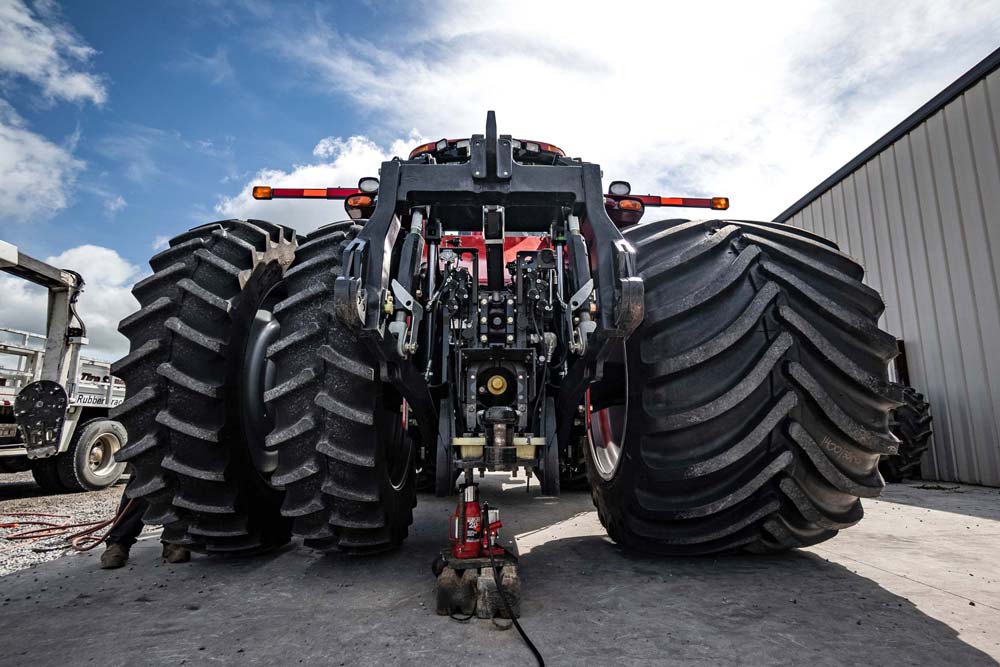
Choosing between low sidewall (LSW) wheels and traditional dual wheels is a recurring decision for farms, contractors, and haulage operations. Both configurations aim to put power to the ground, but they take opposite routes to get there. This article outlines how each setup works and where it fits best.
What Is an LSW Setup?
LSW stands for low sidewall. The concept pairs a taller wheel diameter with a shorter tyre sidewall. The result is a single wheel and tyre assembly that maintains a large overall rolling radius while reducing sidewall flex. In field equipment, LSW fitments are common on tractors, sprayers, and wagons where stability at speed matters.
Because the sidewall is shorter, the tyre deforms less under load. That translates to a firmer contact patch and more predictable steering response, especially on hard surfaces and slopes.
The Case for Duals
Dual wheels have been the default solution for decades. By mounting two wheels side by side on each hub, the operator increases total footprint and splits the axle load across more rubber. This improves flotation in soft ground and lowers soil compaction per square centimetre.
- Wider total contact area for muddy fields
- Redundant support if one tyre is damaged
- Simple, well-understood maintenance routine
Stability and Ride Quality
At road speeds and on side slopes, LSW configurations tend to lower the effective centre of gravity. The reduced sidewall flex means less roll and sway during transport. Duals, by contrast, raise the outer wheel position and can introduce a slight lean when one side meets a firmer surface than the other.
For operators moving between field and highway, the steadier handling of an LSW fitment often outweighs the extra flotation of duals. For slow, heavy fieldwork in wet conditions, duals remain a practical choice.
Footprint and Soil Impact
Soil compaction is a long-term yield robber. Duals spread the load across a broader swath, which can reduce pressure at the surface. LSW tyres use a longer, narrower contact patch to achieve a similar goal through different geometry. Neither eliminates compaction, but each manages it differently based on inflation pressure and axle weight.
Configuration at a Glance
At a glance
Cost and Practicality
Initial outlay, tyre availability, and serviceability all factor into the decision. Duals use proven components and are easy to source. LSW tyres may be more expensive and require specific rims, but they can reduce downtime by improving handling and reducing wear on suspension components.
Ultimately, the best wheel setup is the one matched to your terrain, payload, and uptime needs.